The best fertilizer for tomatoes in pots isn't a single product. It's a sequence: a balanced or slow-release fertilizer at planting, then a lower-nitrogen, higher-potassium feed once the first fruits start to swell. Timing and dose matter more than the brand on the bag.
Containers make feeding more important than in a garden bed. The RHS suggests feeding container plants about six weeks after planting, when the nutrients in the compost start to run out, and University of Illinois Extension points out that frequent watering washes nutrients out of the pot. A tomato that fruits for months needs regular top-ups.
Quick answer: Mix a slow-release fertilizer into the potting mix at planting, or start a dilute liquid feed 3 to 4 weeks after planting. When the first fruits begin to swell, switch to a high-potassium liquid feed every 7 to 14 days at the label rate. Water before you feed, and skip eggshells and Epsom salt as blossom end rot cures.
What the N-P-K numbers mean
Every fertilizer label shows three numbers. According to University of Florida IFAS, they give the percentage of nitrogen (N), phosphorus (P) and potassium (K) by weight, always in that order. A 16-4-8 fertilizer is 16 percent nitrogen, 4 percent phosphorus and 8 percent potassium. The rest of the bag is other material.
For tomatoes, each number does a different job:
- Nitrogen drives leafy growth. Some is needed early, but University of Missouri's IPM program warns that too much nitrogen early on causes lush growth and poor fruit set.
- Phosphorus supports flowering. Illinois Extension's container fertilizing guide says vegetable and flowering crops prefer lower-nitrogen, higher-phosphorus fertilizers.
- Potassium supports flowers and fruit. The RHS lists poor flowering and fruiting among the signs of potassium shortage, and recommends a high-potassium feed for tomatoes in containers.
| Label type | Example analysis | Where it fits for potted tomatoes |
|---|---|---|
| Balanced water-soluble | 20-20-20 | Early growth, before flowering |
| Lower nitrogen, higher phosphorus | 5-10-5 | Mixed into potting mix at planting |
| High-potassium "tomato feed" | Third number highest | From the first swelling fruit onward |
| High-nitrogen lawn feed | First number much higher | Avoid; encourages leaves over fruit |
The 20-20-20 and 5-10-5 examples come from University of New Hampshire Extension's container vegetable guide. Treat them as examples of the type, not specific products.
The best fertilizer for tomatoes in pots at each stage
Feeding needs change as the plant moves from leaves to fruit. Here's how extension guidance lines up across a season.
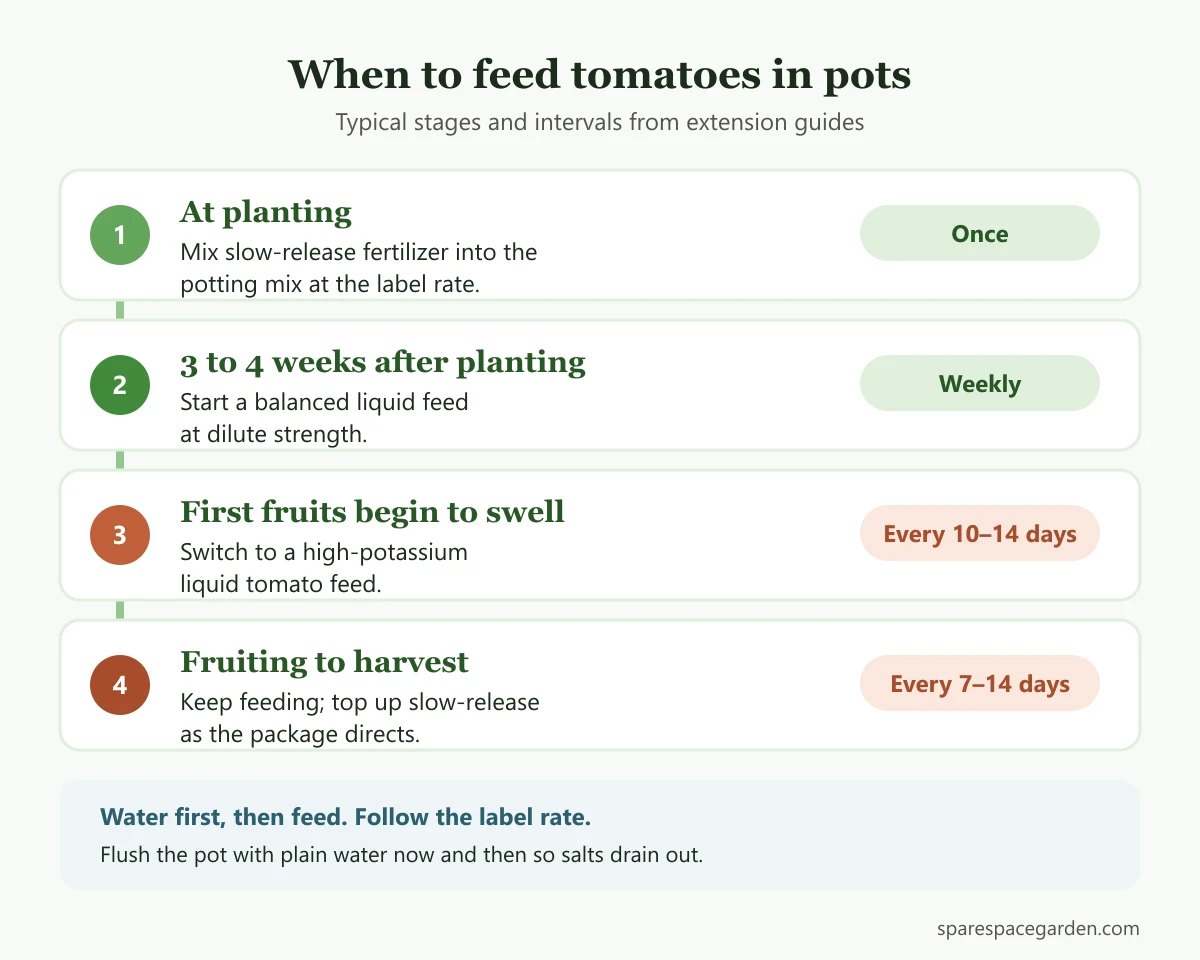 A simple feeding timeline for container tomatoes.
At planting
Clemson Cooperative Extension suggests a balanced timed-release fertilizer at planting, reapplied at the intervals on the package. Colorado State University Extension also recommends mixing controlled-release granules into the potting mix at planting. If your potting mix already contains fertilizer, check the label so you don't double up. Our guide to the best soil to grow tomatoes in pots covers the mix itself.
Early growth, 3 to 4 weeks after planting
UNH Extension suggests starting a liquid or water-soluble fertilizer once plants have been growing for 3 to 4 weeks, applied weekly at a dilute strength. Its examples: 1 ounce (28 g) of 20-20-20 per 4 gallons (15 L) of water, or 1 to 2 tablespoons (15 to 30 mL) of fish emulsion per gallon (3.8 L). Your product's label rate comes first.
When the first fruits set and swell
This is the point to change feeds. The RHS tomato growing guide says to start feeding when the first fruits begin to swell, using a high-potassium liquid fertilizer every 10 to 14 days. In garden beds, University of Missouri suggests adding nitrogen when plants begin to set fruit and repeating every 2 to 3 weeks.
Through fruiting and harvest
Keep feeding while the plant is flowering and ripening fruit. Clemson suggests a water-soluble fertilizer once a week as an alternative to timed-release pellets, and Colorado State says timed-release products alone are not enough under Colorado conditions, so it recommends adding soluble fertilizer to the irrigation water as well. Illinois Extension says you can adjust how often you feed based on the plant's appearance and growth.
Liquid, slow-release or organic fertilizer
Any of these three can be the best fertilizer for tomatoes in pots. The difference is how fast nutrients arrive and how much control you have.
| Type | How often | Strengths | Watch for |
|---|---|---|---|
| Liquid or water-soluble | Weekly to every 2 weeks, or every watering at half strength | Fast, easy to adjust as the plant changes | Easy to overdo; must be measured |
| Slow-release (coated granules) | Once at planting, topped up per label | Steady supply, little effort | Many last 3 to 4 months, shorter than a long season |
| Organic (fish emulsion, blood meal, compost) | Varies by product | Suits growers avoiding synthetic products | Slower; some smell and attract pets |
Liquid feeds
Illinois Extension says a liquid fertilizer reapplied every two weeks or so gives adequate nutrition for most containers, or you can feed at every watering with a half-strength solution. Colorado State gives the same two options: dilute at every watering, or full strength weekly or every two weeks.
Slow-release granules
Illinois describes these as water-soluble fertilizer inside a resin coating that releases small amounts each time it gets wet. Many products for annual plants last 3 to 4 months, according to Illinois, which may not cover a long tomato season without a top-up.
Organic options
Colorado State notes that organic fertilizers such as fish emulsion and blood meal act more slowly and may smell sour enough to attract pets and pests. Compost adds some nutrients too. University of Wisconsin Extension suggests that large containers with more than 25 percent compost may need little added fertilizer, though most guides still recommend regular feeding.
Tip: Liquid feeding gives the most control in a pot. A slow-release fertilizer at planting plus a liquid high-potassium feed from first fruit covers both ends of the season.
How often to fertilize tomatoes in containers
Most extension guidance lands between once a week and once every two weeks. Clemson suggests weekly water-soluble feeding, the RHS says every 10 to 14 days once fruit is swelling, and Illinois says every two weeks or so suits most containers.
Pots need more frequent feeding than garden beds because water carries nutrients out of the drainage holes. Illinois recommends watering occasionally with plain water to leach the pot, which keeps fertilizer salts from building up. Colorado State suggests watering until about 10 percent of the water drains out the bottom.
Always feed moist mix. Illinois advises applying fertilizer when the mix is moist rather than completely dry, and the RHS warns that concentrated fertilizer in dry compost restricts water uptake and can make blossom end rot worse.
Signs of underfeeding and overfeeding
The plant will usually tell you when the routine is off. Compare what you see with the chart and table below.
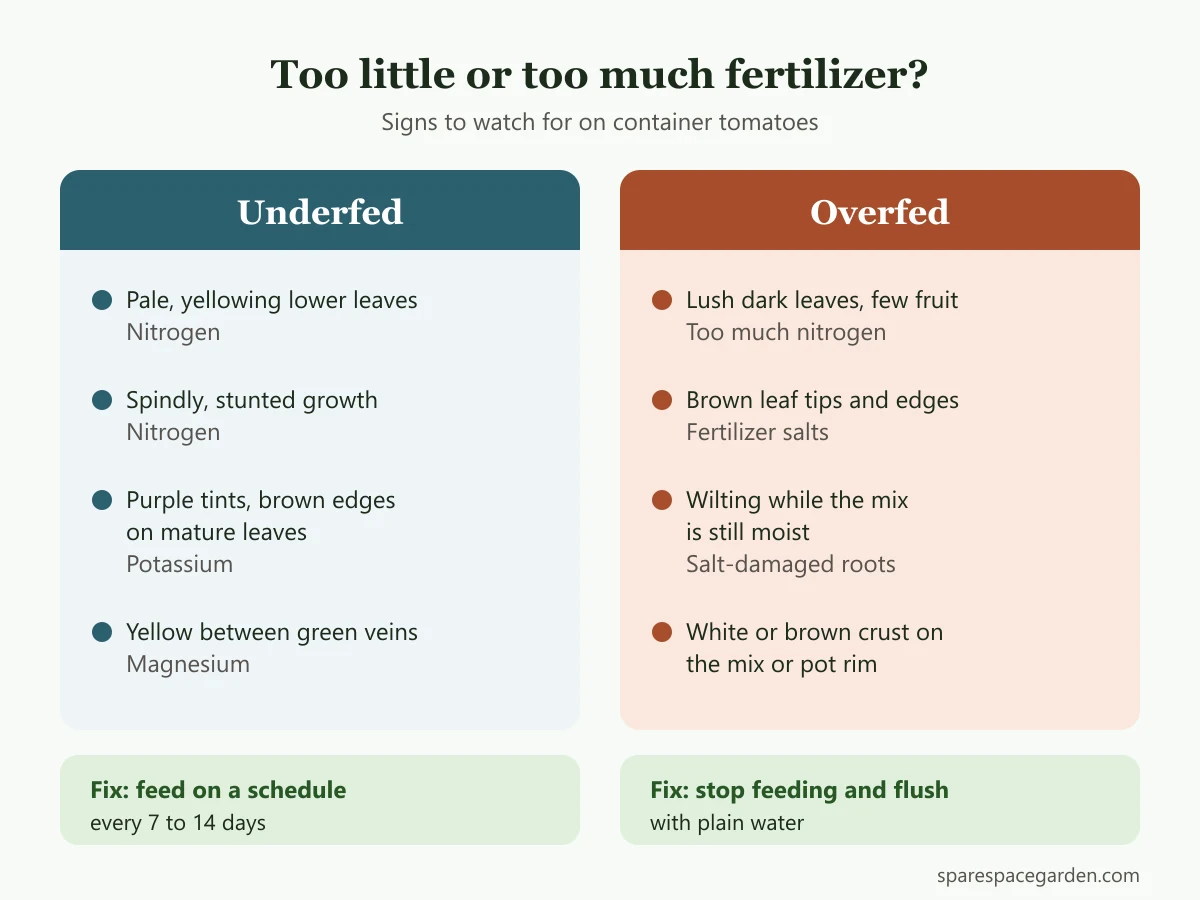 Common signs that container tomatoes need more or less fertilizer.
| What you see | Likely cause | What to do |
|---|---|---|
| Pale, yellowing lower leaves; spindly growth | Nitrogen shortage | Start or increase regular feeding |
| Yellow or purple tints, brown edges on mature leaves | Potassium shortage | Use a high-potassium feed |
| Yellow between green veins on older leaves | Magnesium shortage, often from heavy high-potassium feeding | Ease off tomato feed; consider an Epsom salt leaf spray at the RHS rate below |
| Lush dark leaves, few flowers or fruit | Too much nitrogen | Switch to a lower-nitrogen feed |
| Brown leaf tips, wilting in moist mix, crust on the surface | Fertilizer salt buildup | Stop feeding and flush with plain water |
The deficiency signs come from the RHS guide to nutrient deficiencies, which also explains that plants take up potassium in preference to magnesium, so heavy use of tomato feed can cause magnesium shortage. For the full list of yellowing causes, see yellow leaves on tomato plants in pots.
Overfeeding is a real risk in pots. Washington State University's HortSense page on fertilizer burn says container plants are particularly susceptible to fertilizer damage. High salt levels damage roots and reduce water uptake, so plants wilt, grow slowly and develop brown leaf tips. Look for a brownish or whitish crust on the mix or along the inside rim of the pot. Heavy watering can flush out salts from liquid or quick-release fertilizers.
Calcium myths: eggshells, Epsom salt and sprays
Blossom end rot, the dark patch on the bottom of the fruit, comes from a shortage of calcium in the developing fruit. That leads many gardeners to add calcium, but extension sources agree the usual cause is uneven watering, not a lack of calcium in the mix.
- Eggshells. NC State Extension notes that eggshells are mainly calcium carbonate, but adding them won't make calcium available fast enough to help with blossom end rot. Mississippi State University Extension says the same: eggshells don't fix it.
- Epsom salt. Epsom salt is magnesium sulfate and contains no calcium. North Dakota State University Extension explains that magnesium and calcium compete for uptake, so adding Epsom salt to planting holes may lead to more blossom end rot, not less. Its one sensible use is a real magnesium deficiency, where the RHS suggests a leaf spray of 20 g per liter of water (about 2.7 oz per US gallon).
- Calcium sprays. Sources disagree. University of Maryland Extension says a calcium chloride spray may offer temporary relief, NDSU says calcium sprays might or might not help, and the RHS says leaf sprays of calcium salts don't work because fruit doesn't absorb calcium readily from leaves.
What does help: keep the mix evenly moist, avoid heavy nitrogen (University of Maryland Extension specifically warns against high-nitrogen fertilizers like urea), and use a pot large enough that it doesn't dry out between waterings.
Watch out: Don't add Epsom salt "just in case." Without a magnesium shortage, it adds nothing useful and may make calcium uptake harder.
Mixing and label safety
Fertilizer labels set the dose for a reason. A few habits keep container tomatoes safe:
- Measure every time. Use the scoop or a measuring spoon, and match the dilution to the label. Stronger isn't faster.
- Water first, then feed. Fertilizer goes on moist mix, never bone-dry mix.
- Skip feeding stressed plants. WSU advises against fertilizing plants stressed by heat or drought. Water and let the plant recover first.
- Flush now and then. Run plain water through the pot occasionally so salts drain out.
- Store products safely. Keep fertilizers closed, labeled and away from children and pets, especially smelly organic products.
For other container crops and general timing, see fertilizer for potted plants. For watering, staking and pruning, see tomato plant care in pots.
Frequently asked questions
Is tomato fertilizer better than all-purpose fertilizer?
For fruiting plants, a high-potassium tomato feed is a good match once fruit is swelling, which is when the RHS recommends starting it. Earlier in the season, a balanced all-purpose fertilizer works fine. Using tomato feed alone for months can cause magnesium shortage, so watch older leaves for yellowing between the veins.
Should I fertilize tomatoes right after planting them in pots?
Only with a slow-release fertilizer mixed into the potting mix. UNH Extension suggests waiting until plants have been growing for 3 to 4 weeks before starting liquid feeds, especially if the mix contains compost.
Do eggshells help tomatoes in pots?
Not for blossom end rot. NC State Extension says eggshells don't release calcium quickly enough to help. They're fine in a compost pile, but steady watering does far more for the fruit.
Can you over-fertilize tomatoes in pots?
Yes. Too much nitrogen gives lush leaves and poor fruit set, according to University of Missouri, and excess fertilizer salts can burn roots and leaf tips. If you see a white crust on the mix or brown leaf edges, stop feeding and flush the pot with plain water.
Is fish emulsion good for tomatoes in pots?
It can work as part of a routine. UNH Extension gives 1 to 2 tablespoons per gallon of water as an example rate, applied weekly once plants are established. Colorado State notes that it acts slowly and may smell, so it's better suited to open patios than indoor spaces.