Growing eggplant in containers is a good fit for a sunny balcony or patio, as long as you respect one thing: eggplant wants heat. Give each plant a pot of at least 5 gallons (19 L), a spot with 8 to 10 hours of direct sun, and don't move it outside until nights stay above 50°F (10°C).
Eggplant is a close relative of tomatoes and peppers and is grown much the same way, but it is fussier about cold. A plant set out too early can sit for weeks without growing, and young plants are a favorite of flea beetles.
Quick answer: Grow one eggplant per pot of at least 5 gallons (19 L), or 12 in (30 cm) across. Plant out once nights stay above 50°F (10°C), give it 8–10 hours of sun, water when the top 2 in (5 cm) of mix is dry, and expect the first fruit 55–80 days after transplanting. Pick while the skin is still glossy.
Best eggplant varieties for containers
Any eggplant can grow in a large enough pot, but compact plants and small-fruited types are easier. Illinois Extension notes that small-fruited, exotic-colored and ornamental varieties can be grown in containers. The RHS aubergine guide also points out that smaller-fruited varieties can carry many more fruits than large ones and cope better with a cool summer.
When you browse seed catalogs, the types fall into a few groups:
- Italian or globe types. The classic dark, tear-shaped fruit. University of Maryland Extension describes them as typically 6 to 10 inches (15–25 cm) long. They need the most support and the biggest pots.
- Asian types (Chinese and Japanese). Long, slender fruit with thinner skin and a milder flavor. Clemson's Home & Garden Information Center says Japanese types are picked at about the size of a finger or a hot dog.
- Mini and "fairy-tale" style types. Small purple, white or striped fruit, often only egg-sized or finger-sized. The plants tend to be compact, which makes them the easiest choice for a 5-gallon pot.
- White and ornamental types. Grown for looks as much as eating, and many stay small.
For anyone growing eggplant in containers for the first time, a mini or Asian type is the forgiving choice: smaller plants, lighter fruit and a pot that's easier to keep watered.
| Eggplant type | Fruit size at harvest | Pot size | Support needed |
|---|---|---|---|
| Italian or globe | Up to 6–8 in (15–20 cm) long, glossy | 5 gallons (19 L) or larger | Cage or stake, plus extra ties for heavy fruit |
| Asian (Chinese, Japanese) | Finger to hot-dog size | 5 gallons (19 L) | Stake or small cage |
| Mini and "fairy-tale" style | Egg-sized or smaller | 5 gallons (19 L); 12 in (30 cm) pot at minimum | Often none, or a single stake |
| White and ornamental | Small, varies by variety | 5 gallons (19 L) | Single stake |
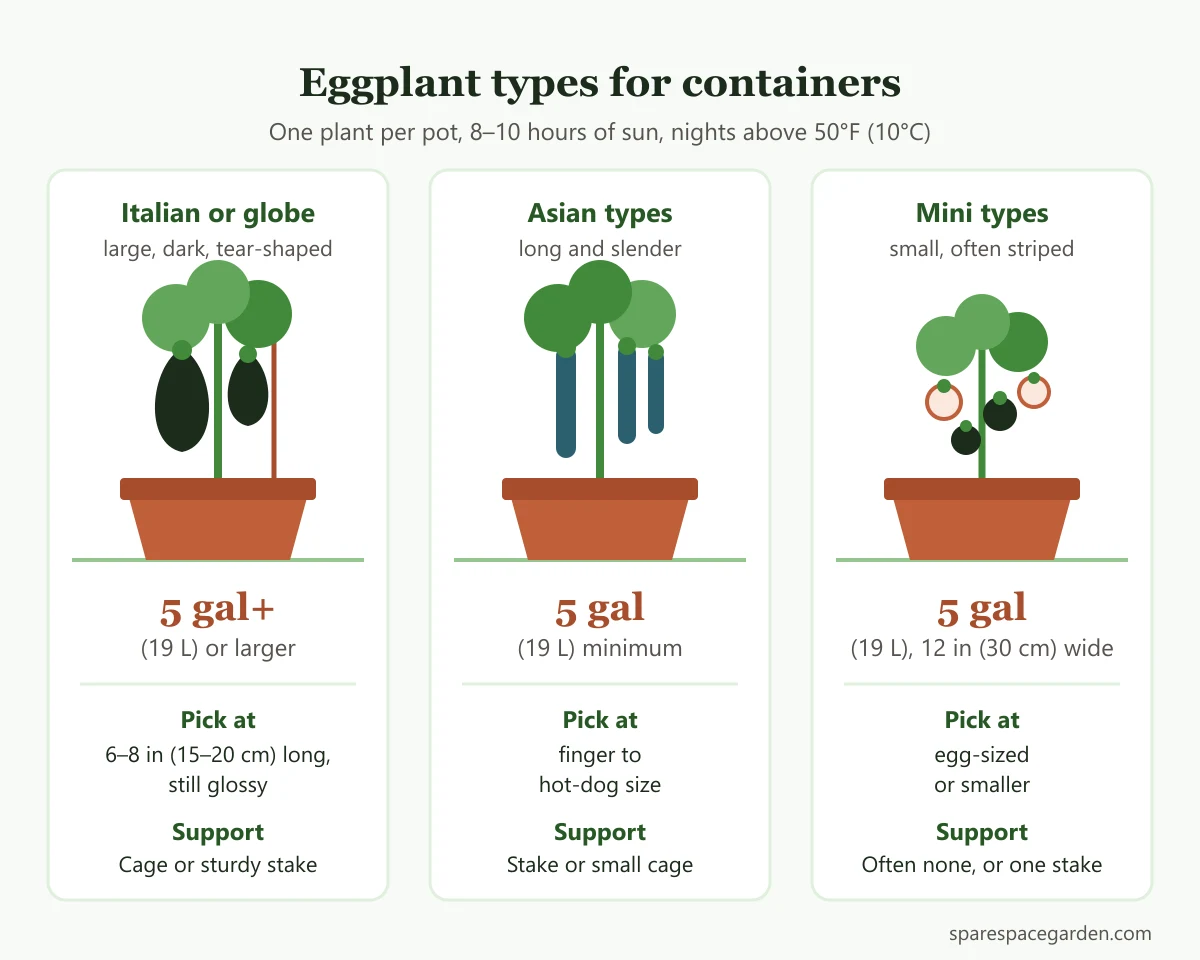 Common eggplant types for pots, with pot size and the size to pick them at.
Tip: If you buy transplants rather than starting seed, Clemson advises choosing stocky plants with no flowers yet. Tall, spindly plants and plants already in bloom tend to grow more slowly and can yield less.
Pot size and potting mix for eggplant
North Carolina A&T's guide to growing fruiting vegetables in containers recommends a container of at least 5 gallons (19 L) with one eggplant per pot. The RHS gives a similar minimum in metric terms: a pot at least 30 cm (12 in) across for one plant, or two plants in a standard growing bag.
Container material affects heat and water. NC A&T recommends light-colored plastic, because dark plastic can overheat the root zone in summer, and it notes that clay or terra cotta pots need watering more often. Whatever you choose, it needs drainage holes in the bottom.
Fill the pot with a commercial potting mix, not garden soil. NC A&T says most mixes are based on composted pine bark, peat moss and perlite, and suggests avoiding mixes very high in peat because peat compresses during the season. Clemson gives a pH of 6.0 to 6.5 for eggplant. Our guide to the best potting soil for vegetables explains what to look for on the bag.
When to plant: eggplant needs real warmth
Timing matters more for eggplant than for almost any other summer crop. Clemson says eggplant grows best when air temperatures are 70 to 85°F (21–29°C). Illinois Extension advises planting out only once nights reliably stay above 50°F (10°C) and the soil has warmed, and notes that eggplant is more sensitive to cold than tomato. NC A&T puts it simply: plant eggplant about five to seven days after you plant tomatoes.
Cold has a lasting cost. University of Maryland Extension explains that cool weather slows both plant and root growth, which lowers vigor and yield, and that cold also makes plants more vulnerable to flea beetles.
If you start your own seed:
- Sow indoors early. Maryland Extension recommends transplants 8 to 10 weeks old.
- Keep seeds warm. The RHS says to germinate eggplant at a minimum of 70°F (21°C), then grow seedlings on at 60–64°F (16–18°C) in good light.
- Harden off. Set plants outside for gradually longer periods before planting out, and the RHS suggests covering newly planted outdoor eggplants with fleece for about two weeks.
Containers give you an advantage here. In a cool spring, park the pot against a sunny, south- or west-facing wall (north-facing in the Southern Hemisphere), which stays warmer than an open patio. Maryland Extension recommends 8 to 10 hours of direct sun, with 6 hours as the bare minimum.
Growing eggplant in containers: planting and staking
Once the weather is warm, planting takes a few minutes.
- Fill the pot with moist potting mix, leaving a little space below the rim for watering.
- Plant one eggplant per pot at the same depth it grew in its nursery container, and firm the mix around it.
- Add support right away. NC A&T suggests a small two-ring tomato cage for taller varieties, or a stake with trellis clips, installed early so you don't damage roots later. The RHS recommends a sturdy bamboo cane tied to the main stem, with extra canes for side shoots once fruit forms.
- Water thoroughly until water runs from the drainage holes.
- Mulch the surface. The RHS suggests a layer of compost at least 2 in (5 cm) deep to hold in moisture.
Pinching encourages a bushier plant. Maryland Extension and the RHS both suggest pinching out the growing tip when the plant is about 12 in (30 cm) tall. NC A&T takes a different approach for container plants and suggests pruning to three main stems by removing suckers. Either works; the goal is a sturdy plant with several fruiting branches rather than one tall stem.
Compact and mini types may not need a cage at all, according to NC A&T, but a single stake still helps a pot on a windy balcony.
Watering and feeding eggplant in pots
Eggplant in a container needs steady moisture. NC A&T advises checking the pot daily and watering when the top 2 inches (5 cm) of mix is dry, keeping it moist but not soggy. In hot weather, the RHS says container plants may need water every day. Clemson notes that soil moisture is most critical during fruit set and fruit development, so don't let pots dry out once small fruits appear.
A few habits help:
- Water in the morning, slowly, until water drains from the bottom.
- Empty saucers afterward so roots don't sit in water.
- If you can't check pots every day, self-watering containers for vegetables hold a reserve below the mix.
Feeding matters because potting mix holds little fertilizer. NC A&T notes that the starter charge in most commercial mixes lasts about two weeks. After that, it recommends a weekly water-soluble fertilizer with an equal ratio, such as 20-20-20, until flowering, then switching to a high-potassium formula such as 9-15-30. The RHS suggests a high-potassium liquid feed every two weeks once the first flowers appear.
Choose one routine and follow the product label for rates. For a comparison of fertilizer types, see our guide to fertilizer for potted plants.
Flea beetles and other common problems
Flea beetles are the classic eggplant pest. University of Maryland Extension's flea beetle fact sheet describes them as shiny black or brown beetles about 1/10 inch (2.5 mm) long that chew small holes, giving leaves a "shot-hole" look. They emerge in late April to early May in Maryland, favor hot, dry spring weather and can ravage young eggplants, leading to low yields of small fruit.
Maryland Extension suggests these controls:
- Row cover. Drape lightweight fabric over hoops so it doesn't rest on the leaves, secure the edges, and keep it on until the plant starts to flower. On a balcony, a cover that wraps around the pot and ties at the base works the same way.
- Kaolin clay. A particle film that reduces feeding. It washes off, so reapply after rain.
- Organic insecticides such as pyrethrum, neem or spinosad for severe infestations. Follow the label exactly.
Healthy, fast-growing plants are more likely to outgrow light feeding damage, which is one more reason not to plant into cold conditions.
Other pests listed by Clemson and NC A&T include spider mites, aphids, whiteflies and Colorado potato beetles. The RHS recommends misting leaves of greenhouse plants with tepid water to discourage red spider mite.
| What you see | Likely cause | What to do |
|---|---|---|
| Many tiny round holes in leaves | Flea beetles | Cover young plants; use kaolin clay or a labeled insecticide if damage is heavy |
| Pale speckled leaves, fine webbing | Spider mites | Mist or rinse leaves; see our guide to spider mites on cucumbers for the same pest |
| Sticky leaves, clusters of small insects | Aphids | Rinse off or use insecticidal soap per the label; see how to get rid of aphids naturally |
| Plant stalls for weeks after planting | Cold soil or cold nights | Move the pot to a warmer spot and wait for warmer weather |
| Dark, sunken patch at the blossom end of fruit | Blossom end rot, which NC A&T lists among eggplant problems | Keep the mix evenly moist and avoid letting pots dry out |
Harvesting eggplant at the glossy stage
The payoff of growing eggplant in containers comes sooner than many gardeners expect, and picking too late is a more common mistake than picking too early. Maryland Extension gives 55 to 80 days from transplanting, and Clemson gives 65 to 80 days depending on variety, or 100 to 120 days from seed.
Look for these signs:
- Gloss. Ripe fruit has very shiny skin. Dull skin means the fruit is overripe, seedy and possibly bitter.
- Size. Maryland Extension recommends picking at about two-thirds of the fruit's full size. Illinois Extension suggests 6 to 8 in (15–20 cm) long for standard types, and Clemson says finger or hot-dog size for Japanese types.
- Feel. Fruit that is rock hard and won't give at all is immature. Maryland and Clemson describe ripe fruit as taking a slight mark when you press it lightly with a thumbnail. Illinois Extension adds that a deep dent that stays put signals fruit past its best.
- Seeds. If you cut one open and the seeds are brown, Maryland Extension says the fruit was overripe.
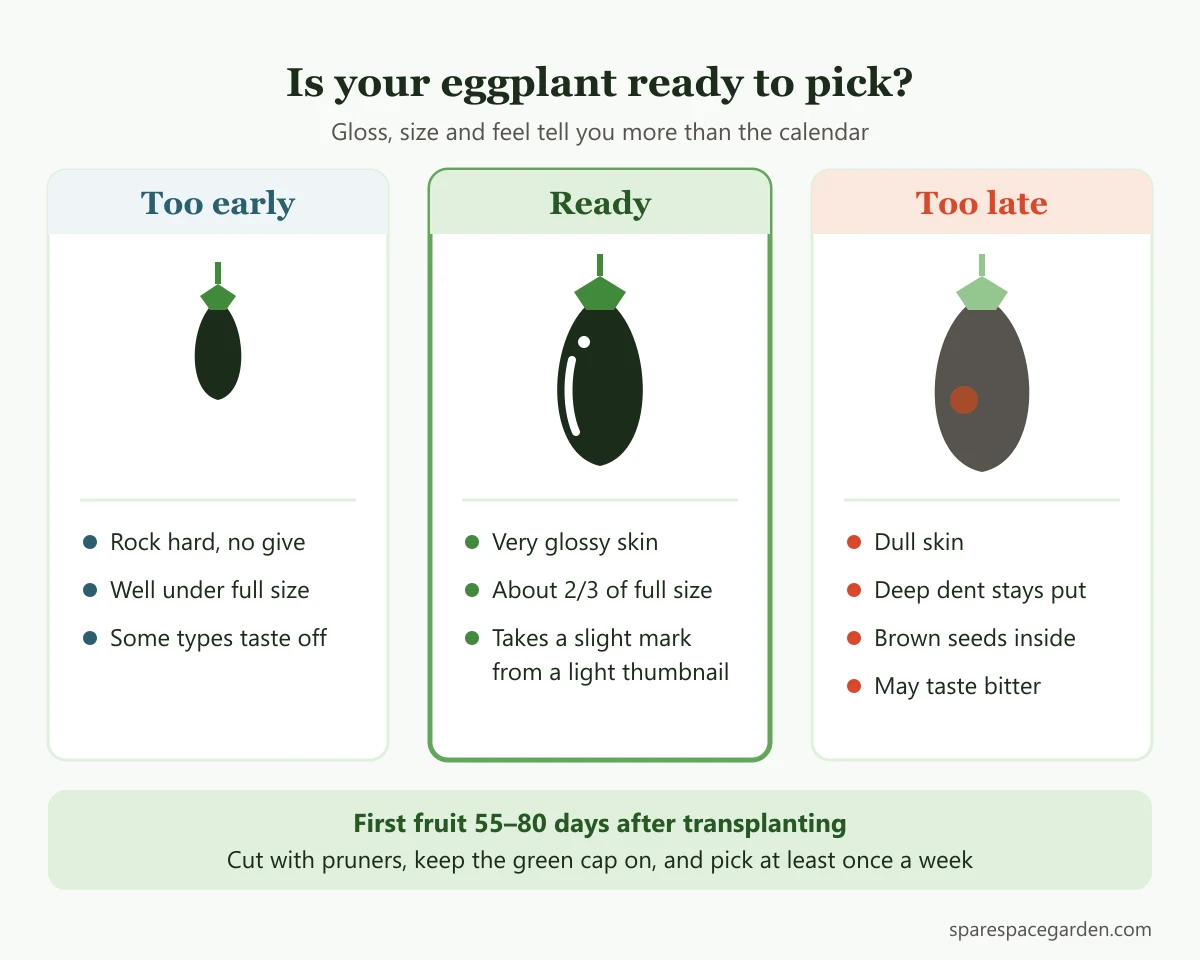 How to tell when container-grown eggplant is ready to pick.
Cut the stem with pruners or a sharp knife and leave the green cap attached. Illinois Extension suggests wearing gloves, since many varieties have prickly stems and caps. Pick at least once a week, as Clemson advises, because mature fruit left on the plant lowers overall production.
Watch out: On large-fruited varieties, the RHS suggests removing extra flowers once five or six fruits have formed, and removing any new fruit that sets in late summer, since it's unlikely to ripen before cold weather.
Eggplant doesn't keep well. Clemson and Maryland Extension give ideal storage as 45–50°F (7–10°C) at high humidity for up to a week, and Illinois Extension recommends using it within a day or two of picking if you refrigerate it.
Frequently asked questions
What size pot does an eggplant need?
North Carolina A&T recommends at least 5 gallons (19 L) per plant, and the RHS gives a minimum of 30 cm (12 in) across. Mini and compact types fit those sizes comfortably. A larger pot holds more water, which helps a lot in midsummer.
How many eggplants can you grow in one container?
One per 5-gallon pot is the standard advice from NC A&T. The RHS allows two plants in a standard growing bag, but each plant then shares water and nutrients, so the bag needs watering even more often.
Why are there tiny holes in my eggplant leaves?
Small round holes, often many of them, are the typical sign of flea beetles. Maryland Extension says young transplants are the most at risk and recommends row covers until flowering, or kaolin clay. Healthy, fast-growing plants are more likely to outgrow light damage.
How many fruits does one eggplant plant produce?
It varies a lot by type. Illinois Extension says a large, vigorous plant can yield four to six fruits at peak season, while the RHS notes that small-fruited varieties can carry many more fruits than large-fruited ones.