Finding bugs in potted plants soil is unsettling, but most of what crawls, jumps or curls up in a container is harmless. Springtails, soil mites, pill bugs, centipedes and stray earthworms mostly eat decaying organic matter or other small creatures, and their main message is that the mix is staying wet.
A short list of soil dwellers does feed on living roots: fungus gnat larvae, root mealybugs and vine weevil grubs. Those are the ones worth acting on, and each one leaves clues you can check in a few minutes.
Quick answer: Tiny jumpers about 1/16 inch (1.5 mm) long are springtails, and slow, tick-like specks are soil mites; both are harmless and fade when you let the mix dry between waterings. Act if you find white, legless C-shaped grubs up to 3/8 inch (10 mm) long (vine weevil), white cottony fluff on the roots (root mealybugs), or clear larvae with shiny black heads (fungus gnats).
How to check what's living in your pot
A few simple checks narrow things down:
- Watch the surface right after watering. Water drives many creatures up. Note whether they jump, fly, crawl slowly or run.
- Look at the drainage holes and saucer. Root mealybugs can crawl out of drainage holes after watering, and pill bugs and millipedes often hide under pots.
- Use a potato slice for larvae. University of California IPM suggests placing raw potato chunks cut side down on the soil to monitor fungus gnat larvae. Check underneath after a few days.
- Slide the root ball out. If the plant is wilting or yellowing despite good watering, tip it out of the pot. Wisconsin Extension notes that root mealybug infestations often can only be confirmed this way.
A cheap hand lens helps, since several of these creatures are smaller than a grain of rice.
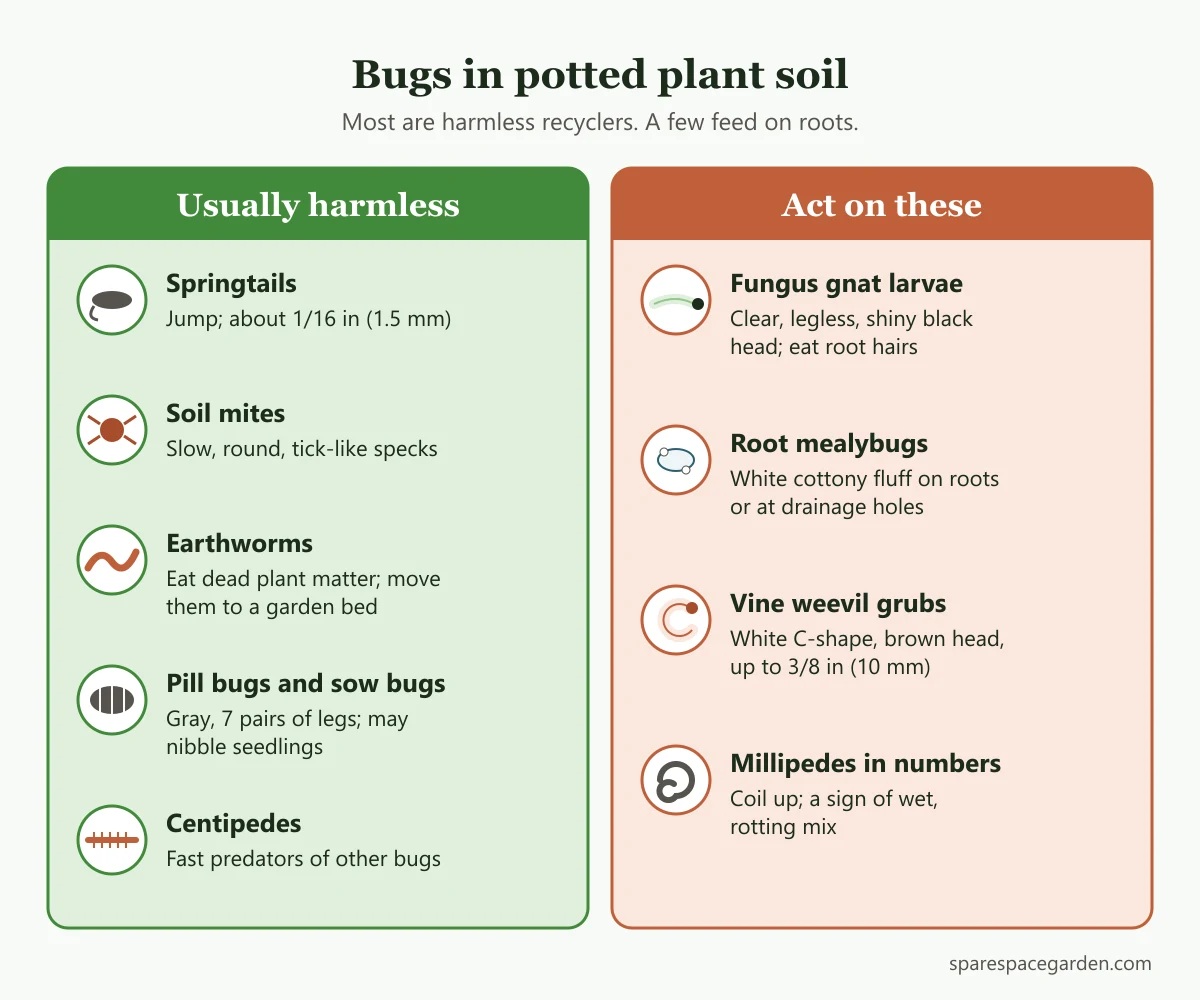 Harmless soil dwellers on the left, root feeders on the right.
Harmless bugs in potted plant soil
These creatures are recyclers or predators. They don't need treatment, though they do tell you something about how wet the mix is staying.
Springtails
Springtails are the most common jumpers in houseplant soil. The UC IPM Pest Notes on springtails describe them as wingless, about 1/16 inch (1.5 mm) long, and whitish, bluish or dark gray to black. They jump up to several inches using a spring-like appendage tucked under the body, which is the easiest way to recognize them.
They feed on decaying plant material, fungi, molds and algae. UC IPM notes that some species can chew small pits in seedling leaves and roots, but mature plants aren't significantly injured. To reduce numbers, let the soil dry between waterings and empty saucers.
Soil mites
Soil mites are tiny, rounded and slow, and they don't jump. The common type, oribatid mites, looks like a miniature tick. Washington State University Extension describes oribatids as scavengers that help break down decaying organic matter and says they should not damage plants. They tend to build up in mix rich in bark and other organic material that stays moist. Letting the surface dry and removing dead leaves from the pot is usually enough.
Earthworms
Earthworms usually get into pots that sat on garden soil. The RHS states that they eat decaying plant material and do not damage growing plants. A pot is still a poor home for them, with little food, so lift them out and release them into a garden bed. Composting worms belong in a worm bin instead; see our guide to indoor worm composting.
Pill bugs and sow bugs
These small gray crustaceans have seven pairs of legs and a segmented, shell-like back. According to UC IPM's pillbug and sowbug guide, adults are about 1/3 to 3/4 inch (8 to 19 mm) long. Pill bugs roll into a ball when disturbed; sow bugs can't, and they have small tail-like appendages at the rear.
They feed mainly on decaying plant material. UC IPM says they occasionally eat seedlings, new roots, lower leaves and fruit touching the soil, so they matter more on a patio vegetable pot than on a houseplant. Clear fallen leaves off the soil, water less often, and water early in the day so the surface dries by evening.
Centipedes
Centipedes are flattened, fast and have one pair of legs per body segment. University of Illinois Extension describes them as predators of small insects and spiders, and notes that they often hide under flower pots. Colorado State University Extension says bites are extremely rare and that, apart from the largest species, centipedes can't bite through skin. Move them outdoors with a trowel rather than by hand.
Bugs that harm roots and plants
These are the soil bugs that feed on living roots or tubers. Finding one or two isn't a crisis, but a plant that wilts in moist soil plus any of these deserves action.
Fungus gnat larvae
Fungus gnats are the small dark flies that rise from the soil when you water. Their larvae live in the mix and, per UC IPM, are whitish to clear and legless, with a shiny black head. They feed on fungi, organic matter and root hairs, and large numbers can damage the roots of seedlings and young plants. The adults don't damage plants or bite.
The fix starts with drier soil at the surface. Our guide on how to get rid of gnats in potted plants covers traps, watering changes and larval treatments in detail.
Root mealybugs
Root mealybugs are the easiest of these pests to miss. NC State Extension's root mealybug page says adult females are about 1/16 to 1/8 inch (1.5 to 3 mm) long, bluish white with a fluffy white coating. They look like large white springtails but move much more slowly, and the powdery white wax they produce can give the soil a bluish tint.
Signs include yellowing, wilting, stunting and fewer flowers, plus small cottony masses near the drainage holes. Known hosts include African violets, hibiscus, chrysanthemums and many indoor palms.
They're hard to clear. Wisconsin Horticulture calls root infestations particularly difficult to control and says discarding the plant is often the most practical option. NC State notes that mealybugs are susceptible to systemic insecticides; if you go that route, choose a product labeled for your plant and use, and follow the label.
Watch out: Root mealybugs can walk out of drainage holes after watering. Move an infested pot away from other plants right away, and don't let saucers or trays touch.
Vine weevil grubs
Vine weevil grubs are among the most destructive soil pests of container plants. The RHS vine weevil guide describes the grubs as plump, white, legless and C-shaped with a light brown head, up to 3/8 inch (10 mm) long, found among the roots. The adults are dull black beetles about 5/16 inch (9 mm) long that cut irregular notches in leaf edges.
The RHS says plants in pots are the most likely to be badly damaged, and most losses occur from September to March when the grubs are nearly full grown. Grubs also bore into cyclamen and begonia tubers and the stem bases of cacti and succulents. A plant that suddenly wilts and lifts out of the pot with almost no roots is a classic sign.
For control, the RHS suggests repotting and picking out as many grubs as you can, then using a biological control. Predatory nematodes such as Steinernema kraussei work at soil temperatures of 41 to 68°F (5 to 20°C), and Heterorhabditis species at 54 to 68°F (12 to 20°C). The RHS recommends applying them in August or early September, before the grubs grow large.
Tip: The RHS points out that yellowish-brown spheres in potting mix are usually fertilizer pellets, not vine weevil eggs. The real eggs are brown and smaller than 1/25 inch (1 mm).
Millipedes in large numbers
Millipedes have two pairs of legs on most body segments and curl into a tight coil when disturbed. Colorado State University Extension gives full-grown common millipedes a length of 1 to 1 1/2 inches (2.5 to 4 cm). They eat rotting organic matter and rarely feed on tender leaves and roots, although millipedes and pill bugs may chew tender seedlings. A few are harmless. A pot full of them means the mix is wet and full of decaying material, which is the thing to fix.
Bugs in potted plants soil: quick identification table
Use this table to match what you see to the likely culprit and the first thing to do.
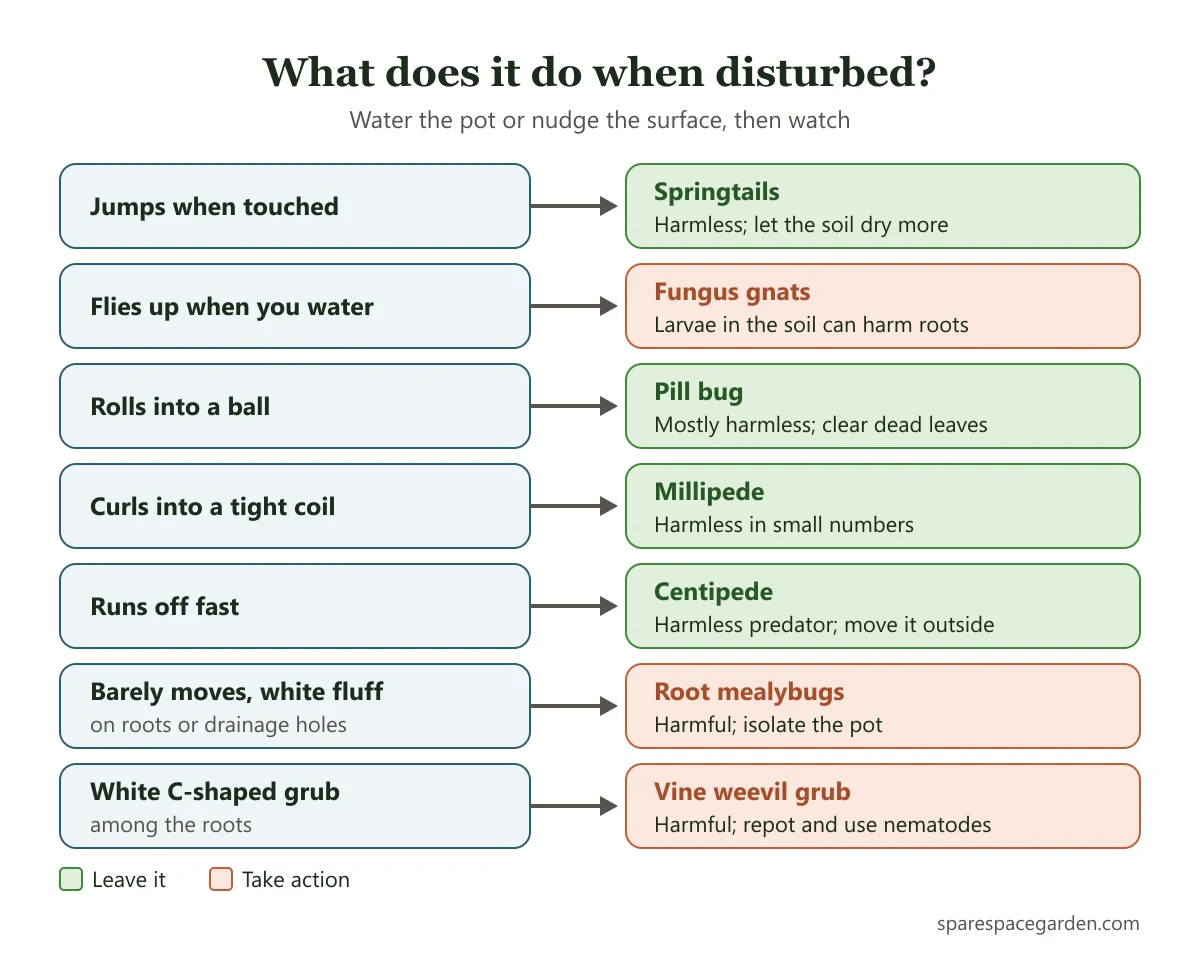 How a soil bug behaves when disturbed is often the fastest clue.
| What you see | Likely creature | Harmful? | First step |
|---|---|---|---|
| Tiny specks that jump when disturbed | Springtails | No | Let the soil dry between waterings |
| Slow, round, tick-like specks | Soil mites | No | Remove dead leaves, water less often |
| Smooth, segmented worm | Earthworm | No | Move it to a garden bed |
| Gray, oval, rolls into a ball | Pill bug | Rarely; may nibble seedlings | Clear debris, dry the surface |
| Fast, flat, many legs, one pair per segment | Centipede | No; eats other bugs | Leave it or move it outdoors |
| Clear larvae with shiny black heads | Fungus gnat larvae | Yes, in large numbers | Dry the top of the mix, treat larvae |
| White cottony fluff on roots or at drainage holes | Root mealybugs | Yes | Isolate the pot; often discard |
| White C-shaped grubs with brown heads | Vine weevil grubs | Yes | Repot, remove grubs, use nematodes |
| Many brown, coiling, two pairs of legs per segment | Millipedes | Mostly no | Reduce watering and organic debris |
Why bugs move into container soil
Almost every creature on this list wants the same thing: damp mix with plenty of decaying material. UC IPM calls the continued presence of springtails indoors "an indicator of moisture," and the same logic applies to soil mites, pill bugs and millipedes.
Common triggers in pots include:
- Watering on a schedule instead of checking whether the mix is dry an inch or so down.
- Saucers left full of water, which keep the bottom of the pot soggy.
- Rich, slow-draining mix, especially heavy compost blends or old mix that has broken down. Our guide to making your own potting soil explains how to keep a mix open and airy.
- Pots that spent summer outdoors on the ground or near beds.
- Dead leaves and old roots left on or in the mix.
White fuzz or mushrooms on the surface usually come from the same wet conditions. That's covered in our guide to fungus in indoor plant soil.
How to deal with harmful soil bugs
- Isolate the pot until you know what you're dealing with.
- Inspect the roots. Healthy roots are firm and pale; chewed, missing or fluff-covered roots confirm a root feeder.
- Repot when grubs or mealybugs are present. Shake off as much old mix as the plant tolerates, pick out grubs, and replant in fresh mix in a clean pot.
- Treat if needed with nematodes for vine weevil grubs, or a product labeled for root mealybugs on your plant, following the label.
- Discard a cheap, heavily infested plant. Starting over is often faster.
Old mix from a pot with vine weevil grubs can be cleaned and reused; our article on whether you can reuse potting soil explains how. Be stricter with root mealybugs: Wisconsin Extension notes that mealybugs can survive on detached plant parts as long as they stay moist, so bin the old mix and roots rather than reusing them.
How to prevent bugs in container soil
- Water when the top of the mix feels dry, and don't let drained water stand in saucers, as UC IPM advises.
- Remove fallen leaves and spent flowers from the soil surface.
- Check new plants closely. Wisconsin Extension suggests keeping them apart for about a week if you can.
- Before bringing pots indoors in fall, check the drainage holes and the underside of each pot.
- Raise outdoor pots on feet or bricks so they don't sit on soil.
Frequently asked questions
Are bugs in potted plant soil bad?
Usually not. Springtails, soil mites, earthworms, pill bugs and centipedes don't damage healthy, established plants. Fungus gnat larvae, root mealybugs and vine weevil grubs are the exceptions, because they feed on roots or tubers.
What are the tiny white bugs jumping in my plant soil?
Tiny white or gray bugs that hop when disturbed are almost always springtails. UC IPM describes them as harmless scavengers that feed on decaying matter, fungi and algae. Let the soil dry between waterings and their numbers usually drop.
How do I get rid of bugs in potted plants soil naturally?
Start by letting the top of the mix dry out, emptying saucers and clearing decaying debris, which handles most nuisance bugs. For vine weevil grubs, the RHS recommends predatory nematodes, a biological control. Root mealybugs are harder and often mean replacing the plant.
Can soil bugs spread to my other houseplants?
Some can. Root mealybugs crawl out of drainage holes and move to nearby pots, and fungus gnat adults fly between plants. Springtails and soil mites move around too, but they don't harm the plants they reach.