The most common cause of tomato leaf curl is physiological leaf roll, a stress response to heat, drought, heavy pruning or root damage. It looks alarming, but the leaves stay green and the harvest usually isn't affected. The serious causes are weedkiller (from spray drift or from residue in compost and manure), viruses such as tomato yellow leaf curl virus, and tiny broad mites.
You can usually tell them apart in a few minutes by checking which leaves curled, which way they curl, and whether their color or shape has changed.
Quick answer: Older, lower leaves that roll upward into a tube but stay green and leathery are physiological leaf roll, which has little effect on the crop. Twisted, cupped or fern-like new growth points to weedkiller from drift or contaminated compost. Small, crumpled young leaves with yellow edges on a stunted, bushy plant suggest tomato yellow leaf curl virus, spread by whiteflies. New leaves curling downward and turning bronze point to broad mites.
Four causes of tomato leaf curl compared
Before treating anything, compare the plant with this table. The age of the affected leaves and the direction of the curl are the two most useful clues.
| Cause | Leaves affected first | How they curl | Color and texture | How serious |
|---|---|---|---|---|
| Physiological leaf roll | Older, lower leaves | Upward, then inward to the midrib | Normal green, thick and leathery | Minor; little impact on yield |
| Weedkiller (drift or residue) | New growth | Downward, twisted or cupped | Narrow, fern-like, veins crowded together | Damaged leaves don't recover |
| Tomato yellow leaf curl virus | Young leaves | Upward and downward, crumpled | Small, yellow edges and between veins | No cure; plant yields little |
| Broad mites | Newest leaves at the tips | Downward | Bronzed or browned, veins stay green | Treatable if caught early |
 Which leaves curl, which way, and what else changes for each cause.
Physiological leaf roll: the harmless cause
This is the one you'll see most often. Clemson Cooperative Extension's fact sheet on tomato leaf rolling lists the triggers as excess moisture and nitrogen, too little phosphorus, heat, drought, severe pruning, root damage, early planting and transplant shock.
It usually starts on the lower leaves. The leaflets cup upward and then roll inward toward the midrib, and in time the whole plant can be affected. The University of Minnesota Extension tomato diagnosis page notes that severe cases can form a tube. The key detail: the leaves turn thick and leathery but keep a normal, healthy green color.
Clemson says leaf roll is more common on vining (indeterminate) varieties than on bush (determinate) types, and it usually shows up as spring turns to summer. University of Georgia Extension describes it as having little impact on fruit production and plant growth.
Containers make several triggers more likely. A pot on a hot, sunny balcony can dry out between morning and evening, and wind speeds that up. Clipping off lots of side shoots and lower leaves in one session counts as severe pruning.
What to do: Nothing drastic. Clemson recommends keeping soil moisture steady with mulch, avoiding excess nitrogen, avoiding heavy pruning, and giving plants some late-afternoon shade. In pots, that means checking the mix daily in summer and pruning a little at a time. Our guide to tomato plant care in pots covers watering and feeding routines.
Tip: Don't cut off leaves that have rolled but are still green. Removing more foliage adds to the pruning stress that can trigger the problem in the first place.
Weedkiller damage: drift and contaminated compost
Tomatoes are very sensitive to hormone-type weedkillers, which mimic plant growth hormones. The damage looks quite different from leaf roll: growth becomes distorted rather than just rolled.
Spray drift
Clemson describes 2,4-D injury as downward leaf rolling, twisted growth, white or split stems and deformed fruit. University of Minnesota Extension adds that the leaves may be twisted, cupped or curled, with veins that are thick and close together, and that the side of the plant nearest the spraying is usually worst.
Think about the last couple of weeks. Was a lawn, driveway or field near your balcony or patio sprayed? Clemson warns that spray can drift much farther than people expect.
What to do: The injury can't be reversed. Depending on the dose, the plant may or may not survive, and Clemson notes that new growth may come in normal. Keep watering and wait to see what the next leaves look like.
Residue in compost, manure and potting mix
This is the cause container growers most often miss. Some weedkillers used on pasture and hay fields, mainly aminopyralid and clopyralid, pass through grazing animals and stay active in their manure. The RHS page on weedkiller in manure says residues in stored manure can persist for two years or more, and it lists tomatoes, potatoes, chillies, beans and peas among the crops where damage is most evident.
NC State Extension's guide to herbicide carryover adds that these chemicals also stay in treated hay, straw and grass clippings, and remain active after composting. Breakdown can take as little as 30 days, but field reports suggest it can take several years.
The RHS describes the symptoms as cupped leaves, fern-like growth, pale, narrow, distorted shoot tips, stunting and prominent veins. NC State notes that in tomato tests the damage sometimes didn't appear until the plants first set fruit, five to seven weeks after transplanting.
The clue in containers is the pattern. If every plant growing in the same bag of mix, manure or compost shows the same distortion, while plants in other mix look fine, suspect residue rather than drift or disease.
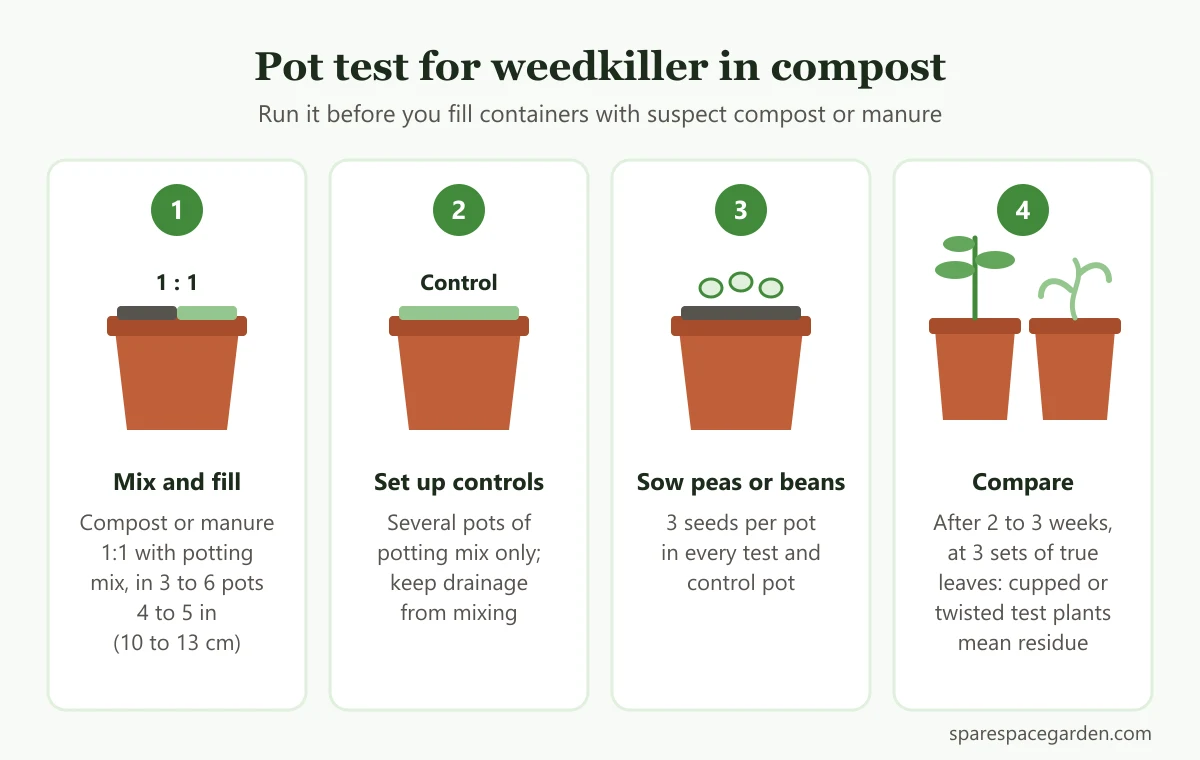 A simple pot test for weedkiller residue, based on NC State Extension's method.
How to test compost or manure
The RHS recommends a germination test for suspect bought manure or compost. NC State describes this version:
- Mix the suspect compost or manure 1:1 with a fertilized commercial potting mix, and fill three to six pots 4 to 5 inches (10 to 13 cm) across.
- Fill several control pots with potting mix only.
- Sow three pea or bean seeds in each pot, and keep the pots apart so drainage can't flow between them.
- Grow them for two to three weeks, until the plants have at least three sets of true leaves, and compare.
If the control pots grow normally and the test pots are cupped or twisted, the material is probably contaminated.
What to do: Replace the mix in affected containers and don't reuse it for tomatoes, peppers or beans. The RHS advises against putting contaminated manure or damaged plants into home compost, and suggests returning unused manure to the supplier. See can you reuse potting soil for handling old mix.
Tomato yellow leaf curl virus and other viruses
Tomato yellow leaf curl virus (TYLCV) is the serious virus behind the name. NC State Extension's TYLCV fact sheet describes yellowing between the veins and along the edges of young leaves, a crumpled look, upward and downward curling, and stunted, bushy plants with shortened stems. Flowers drop before fruit sets, and plants infected young may bear no fruit. Clemson adds purplish veins on the leaf undersides.
The virus is spread by the silverleaf whitefly (Bemisia tabaci). NC State says a whitefly can pick up the virus in 15 to 30 minutes of feeding, carry it for several weeks and travel at least 10 miles (16 km). Symptoms can take up to three weeks to appear.
Where you live matters. NC State lists TYLCV as a threat in the southern United States, the Mediterranean, the Caribbean, Mexico and Japan, and notes that whiteflies don't tolerate winter cold, so it's less of a risk in cooler areas. Infected transplants shipped from warmer regions can still carry it north.
What to do: There's no cure. Pull infected plants, bag them and put them in the trash. To protect the rest:
- Choose resistant varieties; seed catalogs list TYLCV resistance.
- Buy healthy-looking transplants and check the undersides of leaves for whiteflies before you buy.
- Hang yellow sticky traps. UC IPM suggests one trap for every medium-size vegetable plant.
- Spray insecticidal soap or neem on leaf undersides, following the label. UC IPM advises using soap only when plants aren't drought-stressed and the temperature is under 90°F (32°C).
Our article on home remedies for whiteflies on plants covers whitefly control in more detail.
Other viruses
University of Minnesota Extension lists cucumber mosaic, tomato mosaic and tomato spotted wilt viruses as causes of curled or distorted tomato leaves. Look for yellow and light green mottling, or leaves that are unusually long and thin like a shoestring. Clemson recommends removing infected plants, controlling weeds that host viruses, and disinfecting pruners after cutting diseased plants.
Broad mites and aphids: curling at the growing tips
Broad mites
Broad mites are less than 0.2 mm long, so you need a hand lens to see them. According to the UConn IPM program's page on tomato broad mites, new growth becomes distorted and curls downward, and leaves often turn brown while the veins stay green. Growing tips can become malformed and die back, and fruit may develop scarred, cracked patches.
UConn notes that broad mites are most common in greenhouses and high tunnels, thrive in warm, humid conditions, and often arrive on new plants. The damage resembles a virus or a nutrient deficiency, so look for the mites and their eggs (clear, oval, with raised white bumps) on the undersides of young leaves.
What to do: Keep new plants apart from the rest for a while and inspect them first. UConn lists neem oil, horticultural oil and insecticidal soap, applied repeatedly, as organic options, and notes that miticides labeled only for spider mites may not work on broad mites. Always follow the label.
Aphids
University of Minnesota Extension says small numbers of aphids cause little harm, but large colonies can cause curling, stunting and wilting. They're about 1/10 inch (2.5 mm) long and cluster on the leaves. UC IPM notes that some species inject a toxin that makes leaves curl. A strong spray of water knocks many off; see how to get rid of aphids naturally for more.
A quick checklist when leaves curl
Work through these steps in order to pin down the cause of tomato leaf curl on your own plants:
- Note which leaves curled. Lower, older leaves point to leaf roll. New growth at the top points to weedkiller, virus or mites.
- Check the color. Green, leathery leaves are a good sign. Yellow edges, mottling, bronzing or bleached tips are not.
- Look under the leaves with a hand lens for whiteflies, aphids or mites.
- Think back two or three weeks. Was there a heat wave, a dry spell, heavy pruning, nearby spraying, or new compost, manure or mulch?
- Compare plants. Damage on one side suggests drift. Damage on everything in one batch of mix suggests residue.
- Ask for help if unsure. NC State recommends confirming suspected TYLCV with a plant disease clinic or extension specialist.
If the leaves are also turning yellow, our guide to yellow leaves on tomato plants in pots covers nutrient, watering and disease causes.
Frequently asked questions
Will curled tomato leaves uncurl?
Leaves rolled by heat or water stress often stay rolled, but University of Georgia Extension says the condition has little impact on fruit production. Leaves damaged by weedkiller won't recover, though new growth may come in normal if the exposure was light. Judge the plant by its newest leaves.
Can a bag of potting mix cause tomato leaf curl?
It can if the mix contains compost, manure or other material contaminated with aminopyralid or clopyralid weedkillers. The RHS suggests running a germination test on suspect bought compost or manure. If several plants in the same mix show cupped, fern-like growth, test the bag before planting anything else in it.
Why are only the top leaves of my tomato curling?
Curl that starts on the newest growth usually rules out ordinary leaf roll. The likely causes are weedkiller exposure, tomato yellow leaf curl virus, broad mites or a heavy aphid colony. Check leaf undersides with a hand lens and think about any recent spraying nearby.
Can magnesium or potassium shortage cause leaf curl?
NC State lists potassium, magnesium and micronutrient deficiencies among the problems that can be confused with TYLCV. It notes that deficiencies tend to look uniform, while TYLCV is patchy. If you suspect a nutrient problem, check the leaf pattern first rather than adding supplements.